
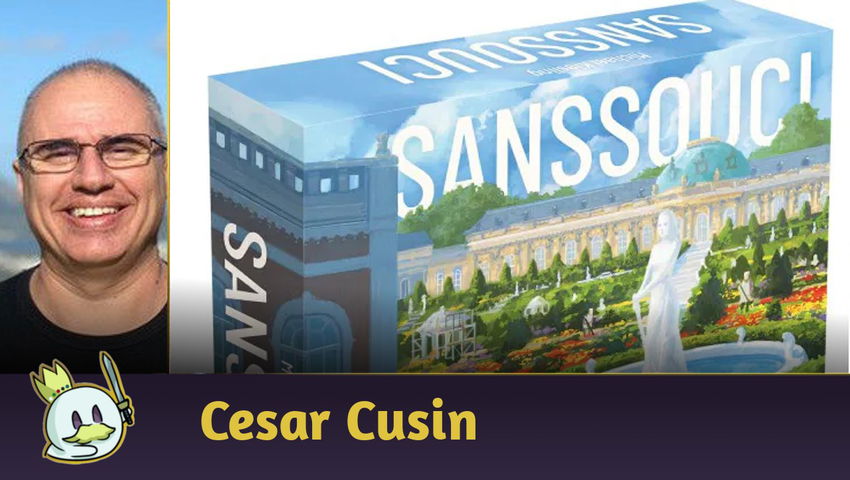











The Sanssouci Palace
The palace was designed by Georg Wenzeslaus von Knobelsdorff between 1745 and 1747 to fulfill the need of Frederick II of Prussia, who wanted a private residence where he could relax, away from the pompous and stressful Berlin Court. During the 19th century, the palace became the residence of Frederick IV, who employed architect Ludwig Persius to restore and enlarge it.

The Palace and its gardens are now a UNESCO World Heritage Site.
The gardens are a true spectacle, containing:
- trees and flowers: planned to reflect harmony and natural order, featuring fruit trees and exotic flowers;
- statues: depicting mythological and allegorical figures, such as Apollo, Venus, and Hercules. They not only beautify the space but also communicate ideas of power, wisdom, and virtue;
- fountains: central elements in the gardens, bringing sound and movement to the landscape. The Neptune Fountain, for example, is one of the most impressive, with sculptures that evoke dominion over the waters;
- pavilions: scattered throughout the park, pavilions such as the Temple of Friendship and the Chinese Pavilion were places of rest and meditation;
- stairs and walkways: the stairs connecting the garden terraces symbolize the ascension of the spirit and the progress of thought. The walkways, in turn, guide visitors along carefully planned routes.

We'll see all this historical context and beauty of the palace's gardens in Sanssouci - the Board Game!
Sanssouci - Game Info
Sanssouci is a 2-to-4 players game, age 10+, by designer Michael Kiesling. Art by Julien Delval, Sergio Chaves, Harald Lieske, and Andreas Rocha.

Sanssouci was released in 2013 by Fractal Juegos. In Brazil, it was released in 2022 by Across the Board. Its mechanics include: hand management, tile placement, and model building.

Sanssouci, in 2014, was recommended for the Spiel des Jahres (Game of the Year).
Let's get to the game!
Playing the Game
It's the 19th century, and King Frederick IV wants to remodel the summer palace built by his uncle, Frederick the Great. During the renovation, he also decided to redesign its surroundings. That's where we come in. We are landscape architects and we have to present a project for the new garden, incorporating statues, trees, fountains, walkways, and beautiful pavilions.
Of course, it won't be easy; despite our creative freedom, there are certain rules to follow, and it's necessary to plan according to demand, in addition to some restrictions. We have to do our best to maintain the garden, as the Nobles appreciate an uninterrupted stroll.
This is the setting of Sanssouci!
In Sanssouci, your goal is to create the best and most impressive garden in the famous Sanssouci Palace. In this game, you and other landscape architects will place ornament pieces on your Garden Board, formed by rows and columns, creating rose gardens, vineyards, living labyrinths, and even fountains.
Players take turns playing action cards from their hand; this determines which ornament pieces can be collected from the Main Board to assemble the garden on their Garden Board. After that, you can move the Noble meeples, and based on where each Noble lands, the number of victory points is calculated.
The setup is like this:
- Place the Main Board in the center of the table;
- Each player places their Garden Board in front of them;
- Each player shuffles their deck of action cards, takes 2 of them for their hand and leaves the rest of the deck next to their Garden Board;
- Each player takes their 9 Nobles and places them on the top row of their Garden Board;
- Each player places their scoring token in space 0 of the Main Board;
- Place the garden ornament pieces in the bag;
- Draw 10 garden ornament pieces and place them on the Main Board;
- Shuffle the mission deck and give 2 “secret” objective cards to each player;
- Choose who will be the first player. Setup ready!

A player's turn consists of:
- Action 1: playing an action card;
- Action 2: placing the garden ornament piece on your Garden Board;
- Action 3 (Optional): moving a Noble;
- Action 4: refill the Main Board;
- Action 5: drawing an action card.
In Action 1, playing an action card, you must choose one of the two action cards in your hand and play it face up in front of you. This card will determine which piece you can take from the 10 available on the Main Board.
There are 3 types of action cards:
- Color: allows you to take a piece from the Main Board that matches one of the two colors of that card, meaning you can choose from 4 pieces, since each color on the Main Board has 2 pieces each.
- Ornament: allows you to take a piece from the Main Board whose ornament matches that of the card. If there are no pieces of this type on the Main Board, you can choose any available ones.
- Free Choice: you can choose any piece from the Main Board.

After playing the action card and taking the desired piece, discard the action card in the center of the table.
Action 2 consists of placing the garden ornament piece on your Garden Board, but be aware that the location where the piece must be placed corresponds to the ornament shown on the piece (column) and the color of the square on the Main Board from which the piece was taken (row).

If the corresponding space is already occupied by a garden ornament piece (or pre-printed ornament on the board), you must turn the piece over to the gardener's side and place it in any free space in the same row or column as the tile where it should be placed.
In the following example, the player chooses purple; the piece on the left could not be used, since there is already an ornament of that type in the purple row. Even so, the player chooses this piece and places it face down in the same row (that is, in the purple row).

Now it's time for Action 3, which is optional, and consists of moving a Noble. If you wish, after placing the piece on your Garden Board, you can move 1 of the 9 Nobles along one of the paths to score points; this is the sole purpose of this action.
To move a Noble, some rules must be respected:
- Nobles can only be moved over garden pieces that are connected to each other, whether they are ornaments, gardeners, or pre-printed ornaments;
- The Noble must always end its movement in the same column and at least one row below where it started. During the movement, the Noble can be moved upwards and sideways;
- A Noble can pass over a piece occupied by another Noble or a piece with a gardener, but can never end its movement on these pieces.

After moving a Noble, the player whose turn it is will receive the victory points indicated by the line where the Noble ended its movement. The victory points will be recorded with the scoring token on the Main Board.
In Action 4, to refill the Main Board, the player whose turn it is randomly takes a piece from the bag and places it in an empty space on the Main Board.

Lastly, on Action 5, the player draws an Action card, so they end up with 2 cards in hand again. Then, play continues with the next player to the left.

The game has 18 turns, so by the 17th turn no one should draw new action cards. On the last turn, you can only play the one card that remains in your hand.
That's how you play Sanssouci!
Ending the Game
The game ends as soon as each player has played their last action card and completed their turn, that is, on the 18th turn.
In addition to the points obtained during the game due to the Nobles, additional victory points are earned as follows:
- 10 points, subtracting the line value (from 2 to 6), for each completed line. Gardeners count as built space in the garden;
- 5 points for each completed column. Gardeners count as built space in the garden;
- for each of your mission cards, you receive the victory points indicated by the line where your Noble ended up in the specified column.

The player with the most victory points wins the game. In case of a tie, among those tied, the player with the most gardeners on their Garden Board is the winner. If the tie persists even after that, the victory is shared.
Strategy Tips
Sanssouci is pure strategy, but also a bit of luck, because of the randomness in the ornament pieces from the bag. This is mitigated by the 2 action cards in your hand, which gives you strategic choices.
In Action 1, playing an action card, there's a strategy for each type of card:
- Color: the good side is that it gives you 4 options for ornament pieces, and the bad side is that 4 out of 10 options for ornament pieces isn't that many. So these cards can be a bit deceiving - they seem very good, but they aren't that good;
- Ornament: is more flexible, because if there's an ornament you want, you just have to choose where the respective piece is on the Main Board, and which color you'll take. Also, it can sometimes be a wild card, because if there are no ornament pieces of that type on the Main Board, you can choose any available piece. Take advantage of this;
- Free Choice: I recommend saving it for the end of the game, if possible, it helps you find "the one" ornament piece to score a lot of points.
In any case, never forget that you must respect the color of the row from which you removed the ornament piece from the Main Board. If you already have an ornament piece of that type in the garden ornament column (or pre-printed ornament on the board), you must turn the piece to the gardener's side and place it in any free space in the same row or column as the tile where it should be placed.
Use this strategically to fill free spaces and complete rows and columns; it's very useful and helps to score points at the end of the game.
Regarding Action 2, which involves placing the garden ornament piece on your Garden Board, think and prepare alternative paths so that the Nobles can, even if they are turning or going uphill, reach further down their respective column to score points. To do this, use the gardeners extensively; they really help with the "alternative paths".
Then, there's an optional, but very useful action, Action 3: moving a Noble. This is how we guarantee many points during the game; in fact, it's the only way to guarantee points during the game. The other points are only added at the end of the game, so take advantage of the Nobles.
Also regarding Nobles, something many people forget: when you move a Noble, it can move sideways and up, but when it stops, it has to stop in its column and cannot stop on a gardener piece, but rather on an ornament piece (or pre-printed ornament on the board) in the respective column.
Another important tip is to keep an eye on your opponents' Garden Boards. This way you can use the strategy of taking a piece they need just to disrupt their game. After all, you can place it on your Garden Board and fill an empty space, or, by chance, turn it into a gardener piece. Disrupting other players is part of the game.
Based on these tips, develop your best strategy and win in Sanssouci.
Unboxing, Rules, and Gameplay videos
Unboxing:
Rules:
Gameplay:
Pedagogical Tips
Sanssouci is an easy-to-explain game that kids will learn on a whim, and it's also language-independent. Being color-based, it also helps provide excellent stimulation for children without them even realizing it.
Children will manage resources with their action cards, and while playing, they will be making decisions about which card to use, which ornament piece to pick up, analyzing the available options.
At the same time, they also use logical-mathematical reasoning to see where the piece will be placed on their Garden Board and, therefore, where and how much their Noble will score.
Spatial awareness will be present at all times, to determine where to place your piece on your Garden Board. Note that strategy is constantly involved. It's also very fun to learn the history about the Sanssouci Palace. Take the opportunity to tell the story of the Palace before playing, as the aerial view of the Palace and Garden is very well represented on the player's Garden Board. They will love it!
Pedagogically, Sanssouci teaches history, resource management, stimulates strategy, decision-making, spatial awareness, and logical-mathematical reasoning, and on top of that, it's fun!
I recommend Sanssouci for your collection!









 Sign in and join the conversation
— Comments 0
, Reactions 1
Be the first to comment